History of the Coast Salish of British Columbia
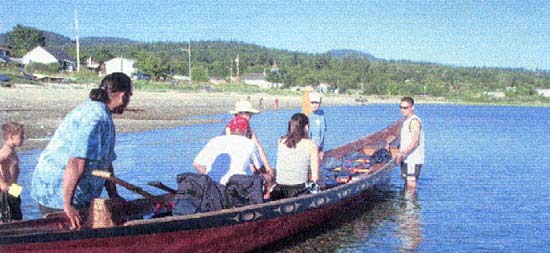
 The Coast Salish inhabit the coastal regions of British Columbia and the Pacific Northwest. There are approximately 20 nations within the Coast Salish, all with their own individual language and culture, one of which is the Sliammon peoples at the northern tip of the Sunshine Coast. The Coast Salish inhabit the coastal regions of British Columbia and the Pacific Northwest. There are approximately 20 nations within the Coast Salish, all with their own individual language and culture, one of which is the Sliammon peoples at the northern tip of the Sunshine Coast.
Sliammon is located 160 km north of Vancouver and 12 km north of Powell River. The community is situated just south of the beautiful Desolation Sound Marine Park, the Copeland Islands and the myriad of inlets, bays, river estuaries and sheltered coves of the northern part of the Strait of Georgia.
The Nation's Traditional Territory extends from the vicinity of Stillwater and Texada Island northward along Malaspina and Gilford Peninsula to the southern area of Homfray Channel and part of Cortes Island.
Although prior to contact with the European settlers, the band was about 20,000 people strong, today there are approximately 860 Sliammon band members. Dinner fires illuminated the sky from Sarah Point in the north to Saltery Bay in the south. The Sliammon people inhabited more than 10 permanent villages and numerous seasonal camp sites throughout the territory. Some of the high-ranking families kept houses built out of giant red cedar at more than one village site. Seasonal village sites were established based on the availability of natural resources like fish, berries and roots. The Sliammon people flourished in a land abundant with these resources and made use of them with highly efficient technology. The Sliammon's intimate knowledge of the land, weather patterns, water levels and the effect of the lunar cycle on fish and animal behavior enabled their survival, as did the cultures willingness to share and cooperate. These values were passed on through story telling, an essential conduit for passing on of the cultural heritage and tradition.
Today the traditional territory of the Sliammon People is one of the most beautiful and protected nature sites in the world. Archaeological sites stand silent witness to the history of the Coast Salish peoples. Shell midden sites, pathways leading from the shoreline to the village site comprised of soil, shells and bones, lay testiment to the size and age of an old settlement. Culturally Modified Trees (CMT's) show tool marks and scars where bark has been removed for the purpose of being crafted into tools including canoe bailers, ropes and shelter. Petroglyphs and pictographs tell indigenous stories preserved in stone.
Experience the Coast Salish Culture
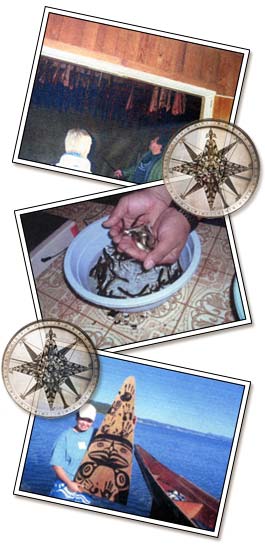
The Historic Lund Hotel is pleased to offer the Sliammon Cross Cultural Program, which involves a 4 hour trip to the Sliammon Fish Hatchery, a traditional salmon bbq and singing & dancing by the bands Nun Kum Dancers. Call for details.
|